
Stories that help
Therapeutic Stories for Kids
A story lets a child live through a hard moment before it happens: the dark bedroom, the preschool door, the new baby coming home. Here you'll find full sample stories and tips for reading them, plus a way to make one where your child is the hero.
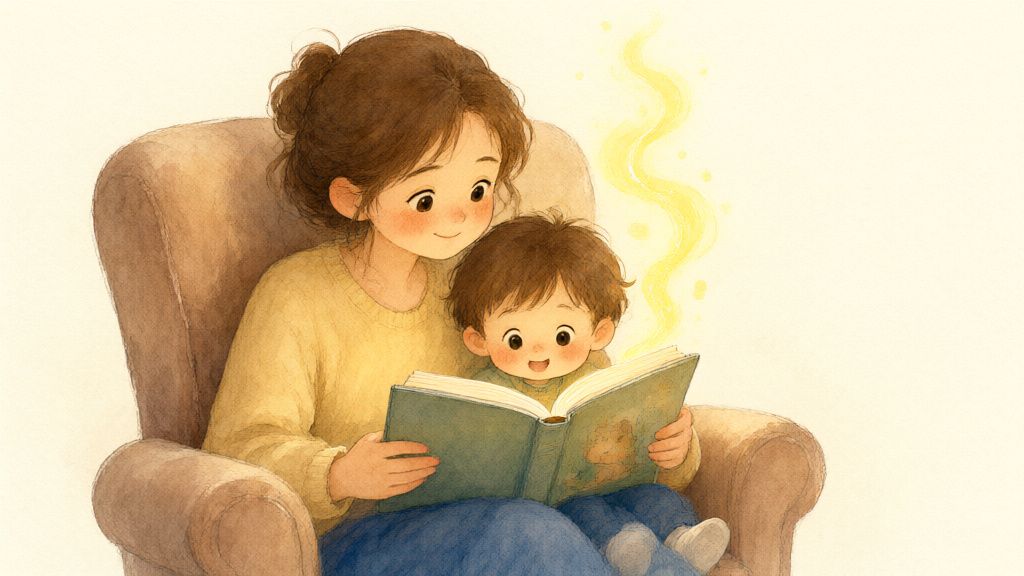
What is a therapeutic story?
A therapeutic story is a story where the hero faces the same challenge your child is facing, and finds a way through it. The child isn't told "don't be scared" or "you need to share." Instead, they watch someone like them feel scared, get some help, try something small and brave, and end up okay.
That indirect approach is the whole point. Young children often can't explain what they're feeling, and they tend to tune out lectures. A story gives them a safe distance. It's about someone else, so it's easier to listen. And because the hero is like them, the lesson still lands.
Parents, teachers and counselors have used stories this way for a long time. You don't need special training to do it. You need a good story and a calm moment.
What a good story with a lesson looks like
- The hero is like your child. Similar age, similar life, ideally the same name and look.
- The problem is named honestly. The hero feels scared, jealous or sad, and nobody makes fun of it.
- There's a helper. A wise grown-up, a friendly animal, a magical object. Someone who guides but doesn't fix everything.
- The hero takes a small step. Not a miracle. One brave, doable thing.
- The ending is warm. The hero is safe, loved and a little prouder than before.
How to read a therapeutic story
- Pick a calm time. Bedtime works, or a quiet moment in the day. Not right after a meltdown.
- Don't explain the moral. Let the story do the work. Kids get it.
- Read it again (and again). Repetition is how a story becomes part of your child's inner toolbox. Many families read the same one for a week or two.
- Let your child lead the conversation. If they want to talk, ask open questions: "How do you think Max felt?" "What helped him?" If they don't want to talk, that's fine.
- Use the story's ideas in real life. If the hero had a special goodbye phrase or a glowing pebble, borrow it.
Why a story with your child's name works even better
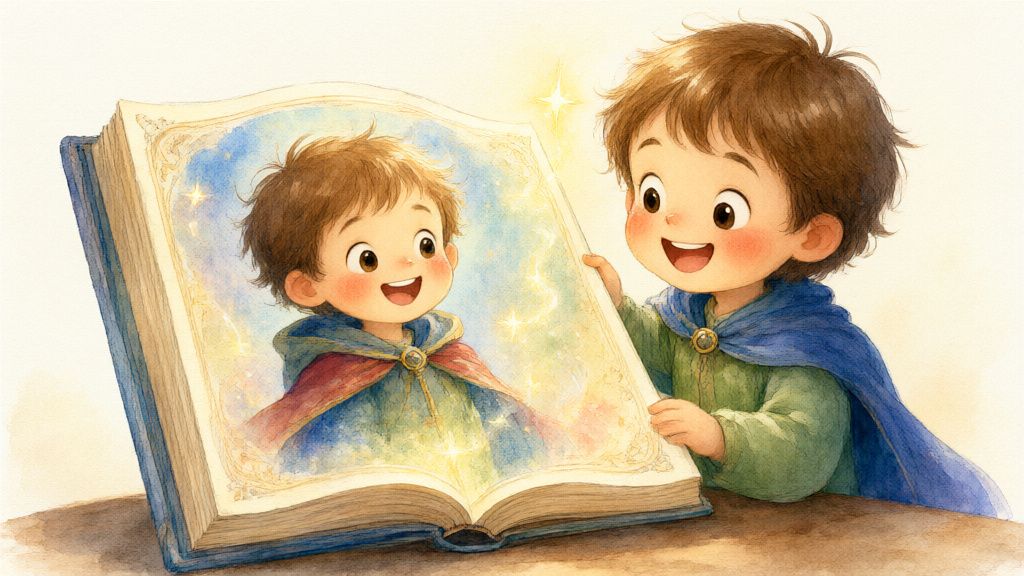
When the hero shares your child's name, hair, backpack and cat, the story stops being about someone else. Your child sees themselves doing the brave thing. That makes it easier to picture doing it for real.
With a Winktale Big story, you can choose a lesson (not being afraid of the dark, starting preschool, sleeping in your own bed, going to the doctor, brushing teeth, sharing, making up after a fight, saying sorry, being brave and more) or write your own situation, like a move or a grandparent in the hospital. Add up to five family members, friends or pets, and edit any page. Creating it is free, including the cover, the full text and the first illustrated pages. You pay once only if you want to keep it.
Topics
Each page below includes a full sample story, plus tips for parents:
- afraid of the dark: night-lights, shadows and a brave first step;
- starting preschool: the goodbye at the door and a happy pickup;
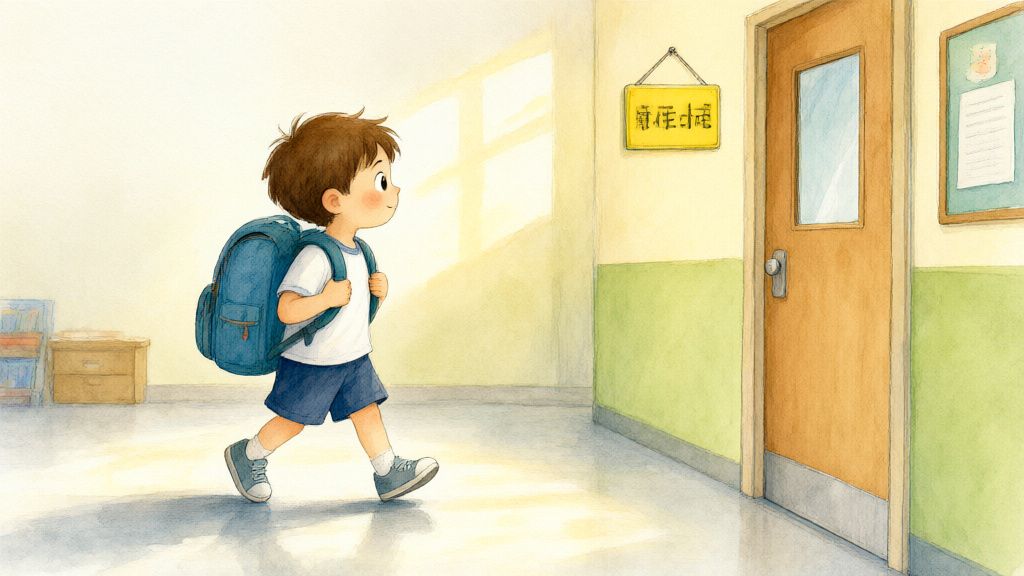
- first day of school: nerves, a new classroom and a friend at recess;
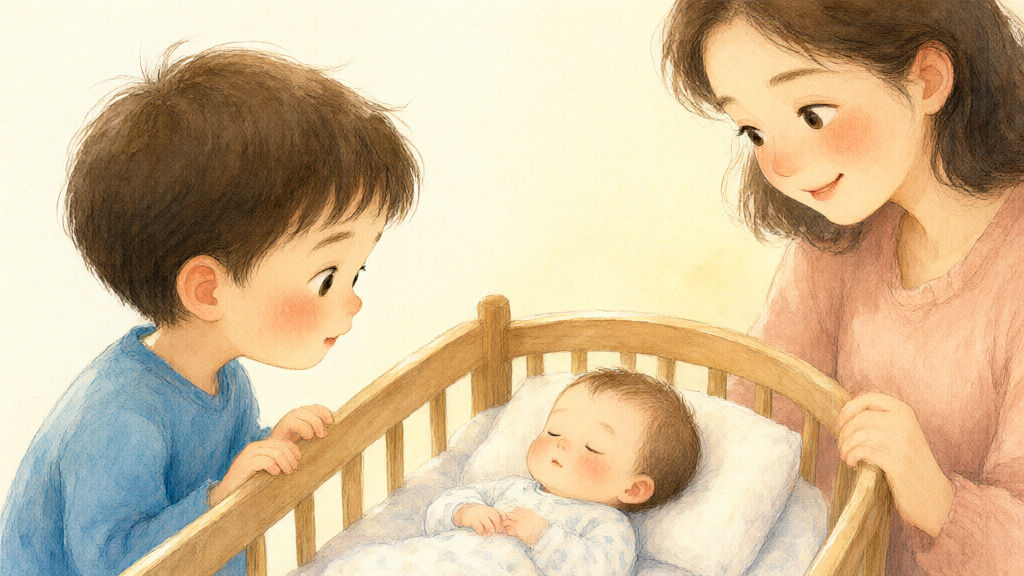
- new baby sibling: jealousy and a special big-kid role;
- potty training: trying, accidents and a proud first success;
- sharing: taking turns and playing together;
- going to the doctor: the checkup step by step;
- brushing teeth: chasing away the sugar bugs.
For a deeper read, see our guides on helping a child who's afraid of the dark, starting preschool and preparing a child for a new baby.
A story is a gentle way to start a conversation, not a treatment. If a fear, worry or struggle lasts for weeks, or keeps your child from sleeping, eating or playing, talk to your pediatrician or a child psychologist.
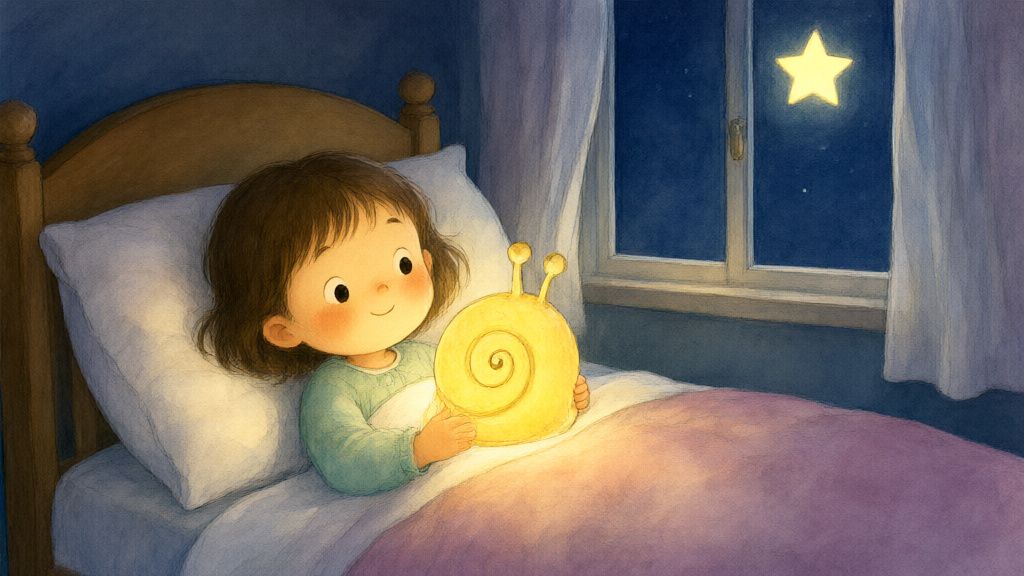
Afraid of the dark
Night-lights, shadows and a brave first step
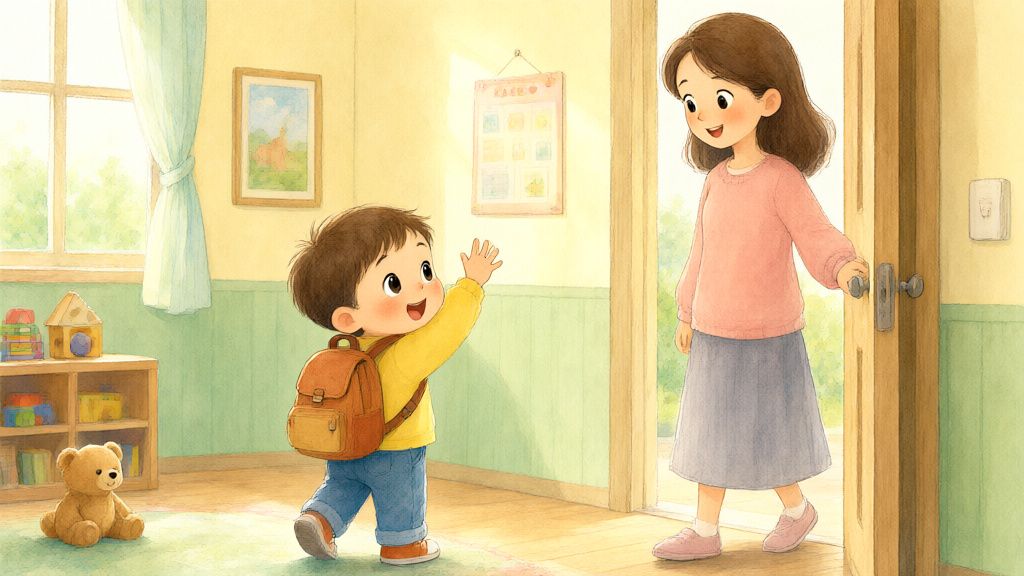
Starting preschool
The goodbye at the door, a new friend and pickup time
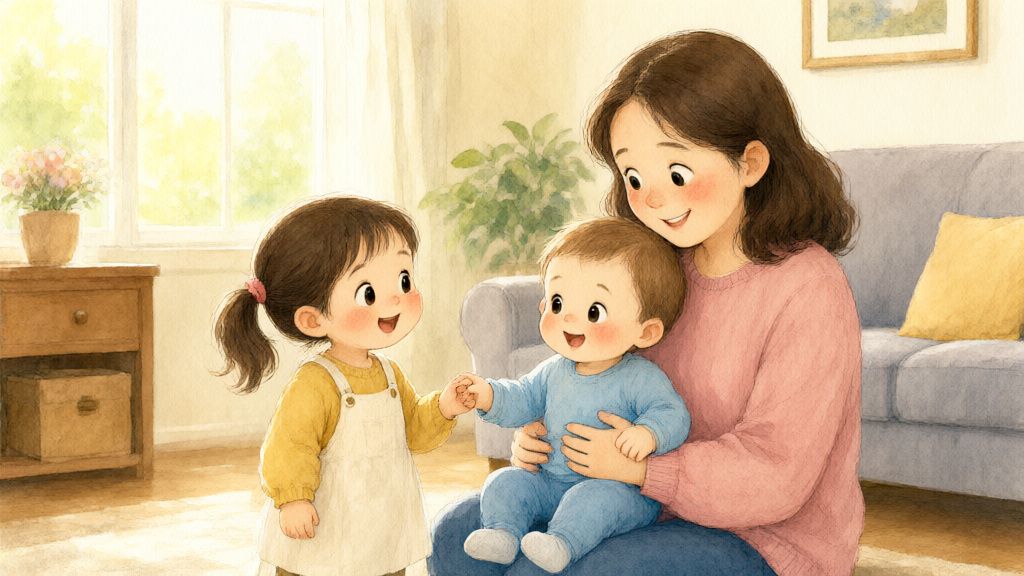
New baby sibling
Jealousy, feeling left out and becoming a big sibling
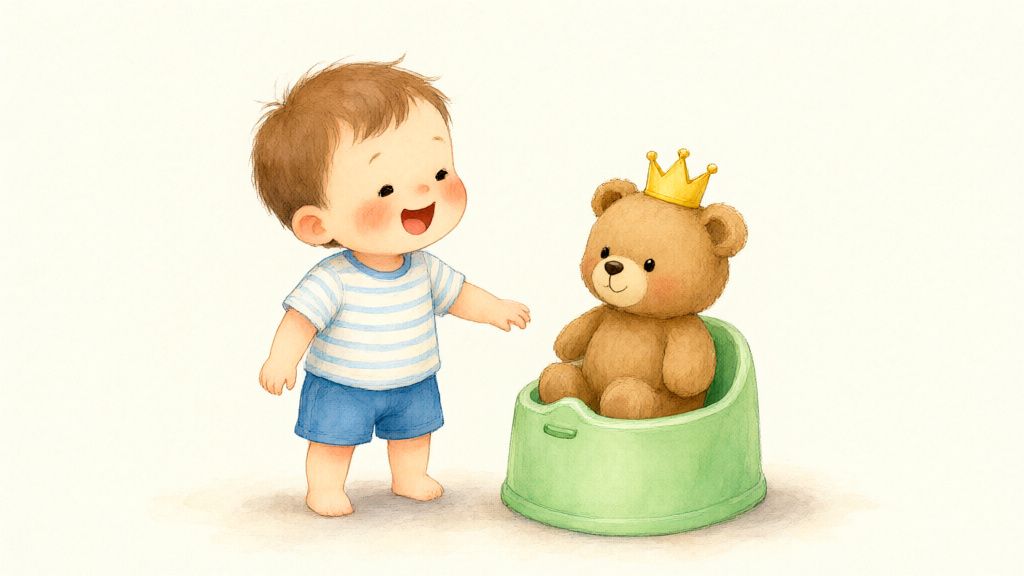
Potty training
Trying, accidents and a proud first success
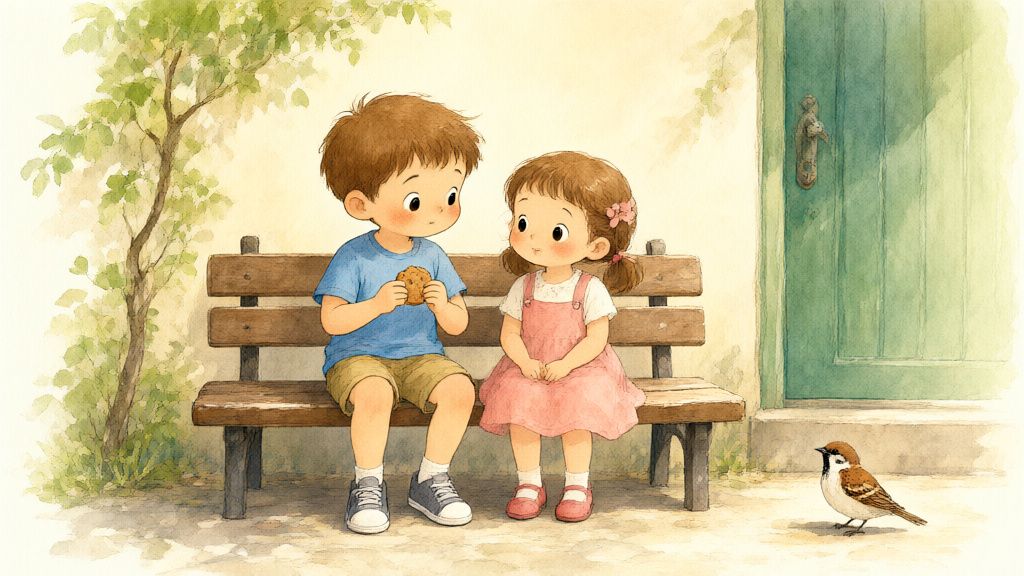
Sharing
Why it's hard, how turns work and why playing together is fun
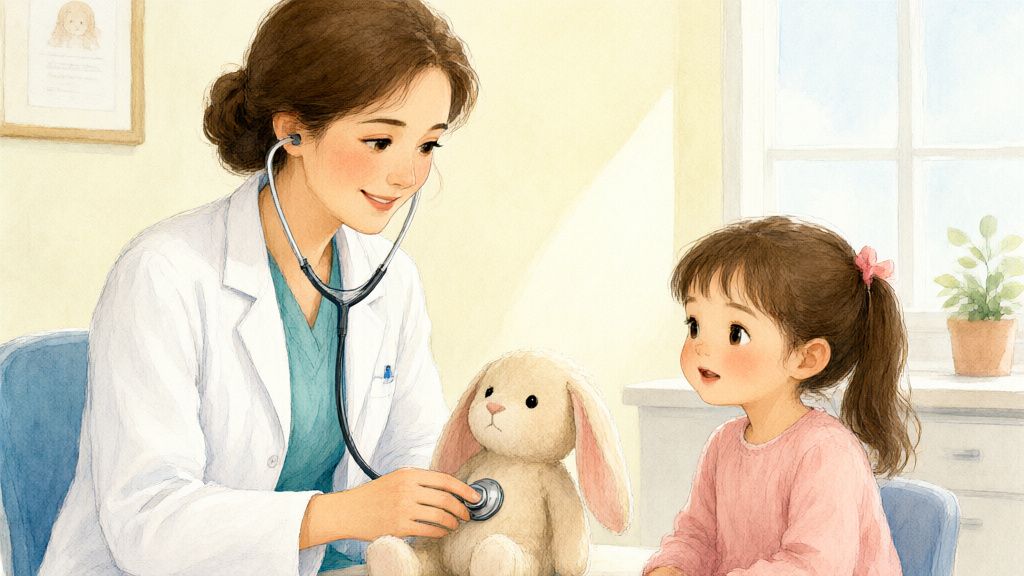
Going to the doctor
The waiting room, the checkup and a brave finish
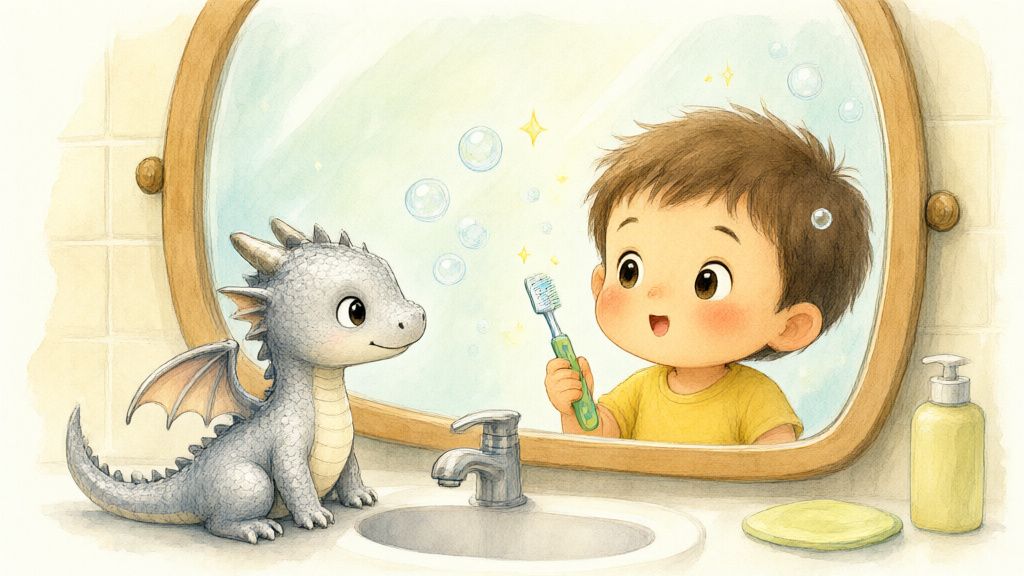
Brushing teeth
Chasing sugar bugs and a sparkling smile
First day of school
Nerves, a new classroom, a friend at recess and pickup
Frequently asked questions
What age are therapeutic stories for?+
They work from about age two, once a child can follow a simple plot, up to around seven or eight. Younger kids need shorter, simpler stories; older kids enjoy more detail.
How many times should I read the same story?+
As often as your child asks. Many families read the same story nightly for a week or two, until the situation feels familiar.
Can a story replace a child psychologist?+
No. Stories help with everyday childhood challenges. If a problem is intense or lasts for weeks, talk to your pediatrician or a child psychologist.
Can I create a story about my own situation?+
Yes. In a Winktale Big story you can pick a ready-made lesson or describe your own, such as moving to a new house or a new daycare.
See also
A story with a lesson, starring your child
Pick a topic, and a hero with your child's name will work through it in the story. Creating it is free.
Create a story with a lesson