How to Prepare a Toddler for a New Baby (and the First Weeks)
November 2, 2026 · 8 min read
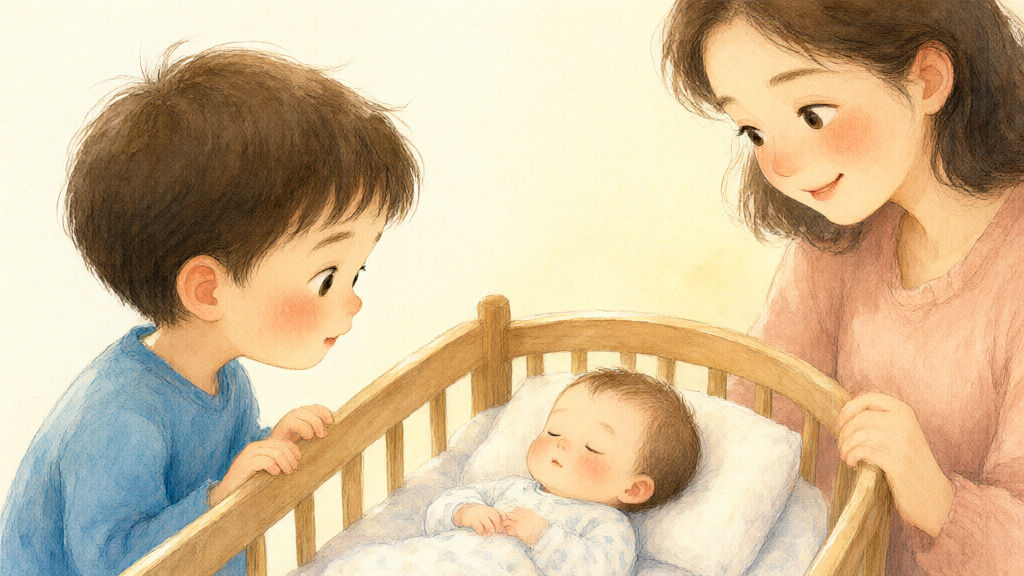
A new baby changes everything for an older child, usually overnight. One day they're the center of the family, the next there's a tiny person who cries, sleeps in your arms and gets all the visitors' attention. Even kids who were excited for months can be thrown by the real thing. If you're wondering how to prepare a toddler for a new baby, the short answer is: talk early, keep it concrete, and plan for the first weeks after the baby comes home as much as for the birth itself.
When to tell your toddler about the new baby
For a two- or three-year-old, nine months is forever. Many parents wait until the bump is visible or until the second trimester, then talk about it more as the due date gets closer. Older preschoolers can handle the news earlier and enjoy following along.
Tie the timing to things your child understands: "The baby will come when it's cold and we have the Christmas tree up" or "after your birthday." That's easier to grasp than a month name.
What to say (and what to avoid)
Toddlers need honest, simple information. Skip the promise of a ready-made playmate. Newborns don't play, and a child who was told they'd get a best friend may feel let down.
Try phrases like:
- "A baby is growing in my tummy. When the baby comes, you'll be a big sister."
- "New babies are very small. They sleep a lot, they cry, and they drink milk. They can't play yet."
- "I'll be busy with the baby sometimes. I will always have time for you, too."
- "There's enough love in our family for everyone."
Avoid making the baby the reason for every change: "You can't do that because of the baby." Children connect the dots quickly and the baby becomes the villain.
Make big changes early
If your toddler is moving to a big-kid bed, starting preschool, or giving up a pacifier, try to do it a couple of months before the birth or wait until well after. Otherwise it can feel like the baby took their crib, their spot, their mom. If preschool falls right around the due date, our tips on starting preschool can help you time and ease the transition.
Ways to get them ready
- Read and tell stories about new babies. Picture books about becoming a big sibling are great conversation openers.
- Look at their own baby photos. "This was you when you were brand new. Look how small you were." Kids love this, and it shows them babies grow into people like them.
- Practice with a doll. Show how to hold a baby's head, how to be gentle, how to whisper when the baby sleeps.
- Visit friends with babies. Seeing a real newborn takes away some of the mystery.
- Give them a role. Picking out a onesie, choosing a toy for the baby, helping set up the nursery.
- Plan the hospital days. Who will look after them? Where will they sleep? Tell them ahead of time and keep it as close to their normal routine as you can.
The first weeks at home
The birth is a milestone. The weeks after are where most of the real adjustment happens.
Make the first meeting about them
When your child comes to visit, try to have the baby in the bassinet instead of your arms, so your first hug goes to your older child. Some families have a small gift "from the baby." It's a simple gesture that sets a friendly tone.
Protect one-on-one time
Even ten minutes a day of your full attention helps a lot. Call it something: "our special time." No phone, no baby, child's choice of activity. When the baby naps, try to give that time to your older child instead of the laundry, at least sometimes.
Ask visitors to say hi to the big sibling first
Grandparents and friends tend to rush to the baby. A quiet request ("Could you say hi to Mia first?") goes a long way.
Let them help, but don't require it
Fetching a diaper, singing to the baby, choosing a pacifier. Praise the help, but don't make it a chore. Some days they'll want nothing to do with the baby, and that's okay.
Jealousy and regression are normal
It's very common for an older child to:
- ask for a bottle or want to be carried again;
- have potty accidents after being trained;
- talk in a baby voice;
- act out, especially while you're feeding the baby;
- say things like "Send the baby back."
This is how a small child says "I need to know I still matter." Scolding usually makes it last longer. Instead:
- Name the feeling. "It's hard having a new baby around. Sometimes you wish it was just us."
- Allow feelings, set limits on actions. "You can be mad. You can't hit the baby. Let's stomp our feet together instead."
- Give extra babying when they ask for it. Rocking them, carrying them for a minute. It tends to pass faster when it's allowed.
- Notice the big-kid stuff. "You poured your own water! Babies can't do that."
Feeding times are often the hardest. A "nursing basket" with special books and quiet toys that only come out when you feed the baby can turn a tough moment into something they look forward to.
How a story helps a big brother or sister
Children often can't explain what they feel about a new sibling. A story lets them see it from the outside. A hero who feels left out, gets cross, and then finds their own special place in the family gives your child words and a path.
It works especially well when the story is about your actual family. With a Winktale Big story, you can add up to five family members, friends or pets, so the new baby, mom, dad and even the dog can all be in it, with your older child as the hero. Pick the lesson you need, or describe your own situation.
On our new baby sibling stories page you'll find a full sample story and more ideas. Other stories for life's big moments live in the therapeutic stories section. And if you're shopping for a gift for a big sibling-to-be, take a look at our new baby gift ideas. Once the baby is older and the squabbles start, our guide on siblings fighting picks up where this one leaves off.
When to get extra help
Most children adjust over weeks to a few months. Talk to your pediatrician if your child seems very withdrawn, aggressive toward the baby in ways you can't redirect, or if regression and sleep trouble keep going long after the household has settled down.
A story is a gentle way to start a conversation, not a treatment. If jealousy, regression or sleep problems last for weeks and keep getting harder, talk to your pediatrician or a child psychologist.
Frequently asked questions
When should I tell my toddler I'm pregnant?+
Many parents wait until the pregnancy is visible or the second trimester, since time feels very long to a toddler. Tie the due date to something they know, like a holiday or a season.
Is it normal for my toddler to regress after the baby arrives?+
Yes. Wanting a bottle, potty accidents and baby talk are common reactions to a new sibling. Responding with patience and a bit of extra attention usually helps it pass.
How do I handle jealousy toward the new baby?+
Name the feeling, keep firm limits on hurting, and set aside daily one-on-one time with your older child. Ask visitors to greet the big sibling first.
Can I include the new baby in a personalized story?+
Yes. In a Winktale Big story you can add up to five family members, friends or pets, so the baby, parents and even the family dog can appear alongside your child.