Toddler Afraid of the Dark? What Actually Helps at Bedtime
November 2, 2026 · 7 min read
If your toddler is afraid of the dark, you already know the routine: one more drink of water, the hall light on, "Can you stay until I fall asleep?" and then footsteps at 2 a.m. It can wear everyone out. The good news is that fear of the dark is one of the most common childhood fears, and it usually fades with time, patience and a few small changes at bedtime.
Here's why it happens and what tends to help.
Why kids get scared of the dark
Somewhere between two and three, imagination takes off. A child can now picture things that aren't in the room, but the part of the brain that says "that's just a coat on a hook" is still catching up. So the coat becomes a monster, the creak in the hallway becomes footsteps, and the dark becomes a blank screen for whatever their mind projects onto it.
A few other things add fuel:
- Being alone. Bedtime is often the only part of the day a small child spends by themselves. That alone can feel big.
- Less control. In the dark they can't check what's going on around them.
- Something they saw or heard. A spooky cartoon, an older cousin's ghost story, Halloween decorations on the neighbor's lawn.
- Change. A move, a new baby, starting preschool or daycare. Worry from the day often shows up at night.
None of this means something is wrong. It means your child's mind is growing faster than their sense of what's real.
What not to do
It's tempting to fix the fear fast. These shortcuts usually backfire:
- Laughing it off or shaming. "You're a big boy, there's nothing to be scared of" teaches a child to hide the fear, not lose it.
- Playing along with the monster. Spraying "monster spray" or checking under the bed every night can accidentally confirm that something might be there. Some families find a playful ritual helps; just watch whether it calms your child or makes the search longer each night.
- Threats. "If you get out of bed one more time..." makes bedtime itself feel scary.
- Scary media before bed. Even shows that seem mild to an adult can stick in a three-year-old's head for days.
What to say instead
Children don't need a lecture on why monsters aren't real. They need to feel heard and safe. A few phrases parents find useful:
- "You feel scared when it's dark. That makes sense. I'm right here."
- "Our house is safe at night. Mom and Dad lock the doors and we're just down the hall."
- "Your brain is really good at imagining things. Let's imagine something cozy instead."
- "If you need me, you can call me. I'll come check on you in five minutes."
That last one matters. Promise a check-in and keep it. When a child trusts that you'll come back, they stop needing to keep you in the room.
Practical steps that help
Make the room feel safe in daylight
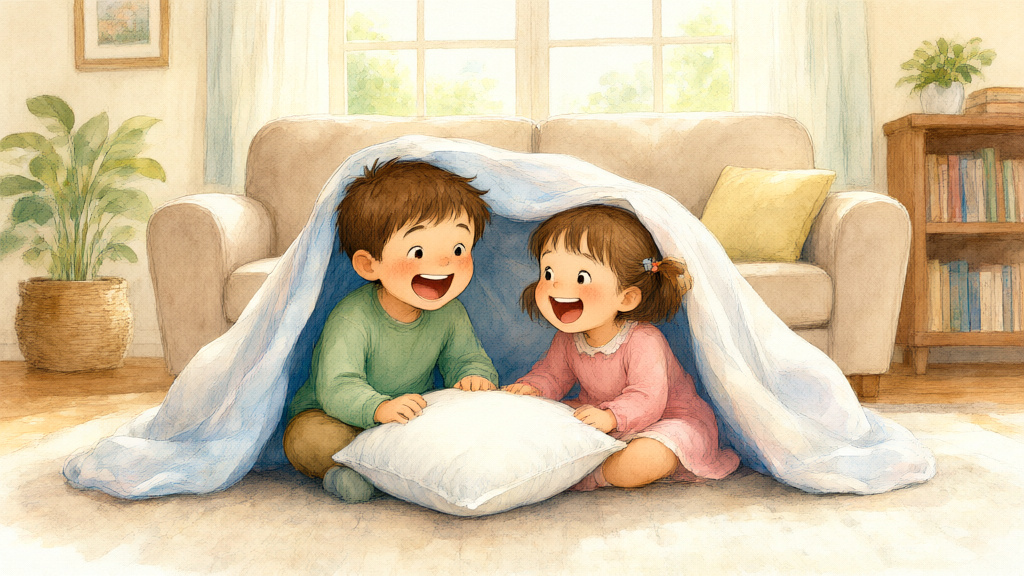
Spend time in the bedroom during the day. Build a blanket fort, read on the bed, play a game of flashlight tag at dusk. A room that's fun at 4 p.m. feels less strange at 8 p.m.
Use a night-light, the right kind
A dim, warm night-light is perfectly fine. Pick one with an orange or amber glow rather than bright white or blue light, and place it so it doesn't throw big shadows across the wall. Let your child choose it. Ownership helps.
Walk through the shadows together
Turn the lights off and look around the room as a team. "What's that shape? Oh, it's your robe. And that's the lamp." Then turn the lights back on and check. Repeating this a few evenings shows your child that the room doesn't change when the lights go out.
Give them a "brave buddy"
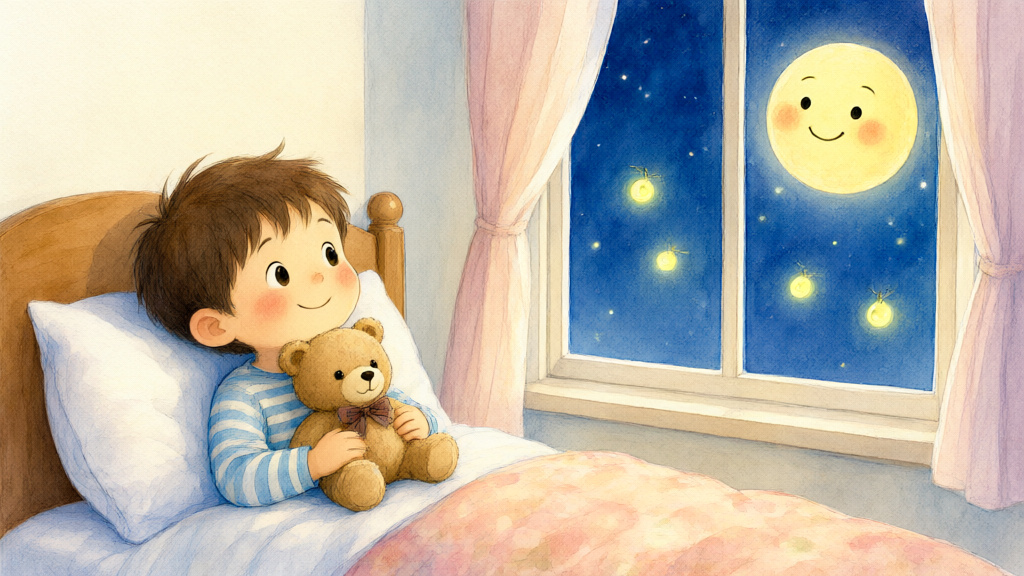
A stuffed animal on night duty, a special blanket, or a small flashlight they're allowed to keep by the bed. Having something to hold or switch on gives back a bit of control.
Keep bedtime calm and predictable
Bath, pajamas, teeth, story, song, lights. The same order every night. Predictability lowers anxiety, and a wound-up child is more likely to get scared. If bedtime is a battle for other reasons too, our guide on what to do when a toddler won't go to bed goes deeper.
Practice small steps
If your child sleeps only with the overhead light on, don't flip straight to total darkness. Move to a lamp, then to the night-light, then to the night-light and an open door. Celebrate each step in the morning: "You slept with just the night-light! How did it feel?"
How a bedtime story helps with fear of the dark
Stories are one of the gentlest tools you have here. When a child hears about a hero who is scared of the dark and finds a way through it, they rehearse that courage without being put on the spot. Nobody tells them "don't be scared." They just watch someone else be brave, and borrow a little of it.
A good fear-of-the-dark story usually has:
- A hero who feels exactly what your child feels. The fear is real and nobody laughs at it.
- A helper. A wise owl, a glowing firefly, the moon itself. Someone who guides but doesn't do it for them.
- A small, doable act of bravery. Turning the lamp off on their own, peeking at the shadow, saying goodnight to the stars.
- A cozy ending. The night turns out to be quiet and kind, and home is right where they left it.
It works even better when the hero is your child. Same name, same pajamas, same stuffed bunny. On our stories for kids who are afraid of the dark page you'll find a full sample story, and the therapeutic stories hub collects stories for other tricky moments.
Read the story a few nights in a row. Kids like repetition, and each time the ending feels a little more true. Afterward, if your child wants to talk, ask easy questions: "What did Owl say to help?" "What would you do if you were in the story?" If they don't want to talk, that's fine too. The story still did its work. You can also make up your own: our guide on how to make up a bedtime story has a five-step formula that works well for a friendly-night story.
When the fear is bigger
Most nighttime fears ease within a few weeks of steady, calm handling. Some kids go through phases, with a flare-up after a move or a scary movie. That's normal too.
Check in with your pediatrician if:
- the fear lasts for weeks and is getting worse rather than better;
- your child is afraid during the day as well, or the fear is spreading to other situations;
- there are frequent night terrors, loud snoring or long wake-ups;
- something stressful happened and your child seems changed by it.
A story is a gentle way to start a conversation, not a treatment. If your child's fear of the dark lasts for weeks, keeps them from sleeping or starts to affect their days, talk to your pediatrician or a child psychologist.
Frequently asked questions
At what age are kids afraid of the dark?+
It often shows up around two or three, when imagination grows quickly, and can come and go through the early elementary years. Many children grow out of it gradually as they learn to tell what's real from what's imagined.
Is it okay to use a night-light?+
Yes. A dim, warm-colored night-light is a simple and common way to help. Pick a soft amber glow over bright white or blue light and position it so it doesn't cast big shadows.
Should I let my scared child sleep in my bed?+
That's a family decision. If you'd rather your child sleep in their own room, try sitting by their bed and promising regular check-ins instead. Short, reliable visits often build more confidence than moving them to your bed.
Can a bedtime story really help with fear of the dark?+
A story won't make the fear vanish overnight, but it gives your child a hero to identify with and a way to rehearse bravery. Many parents find it opens up a conversation their child wouldn't start on their own.