Starting Preschool: Tips for Easier Drop-Offs and First Weeks
November 2, 2026 · 7 min read
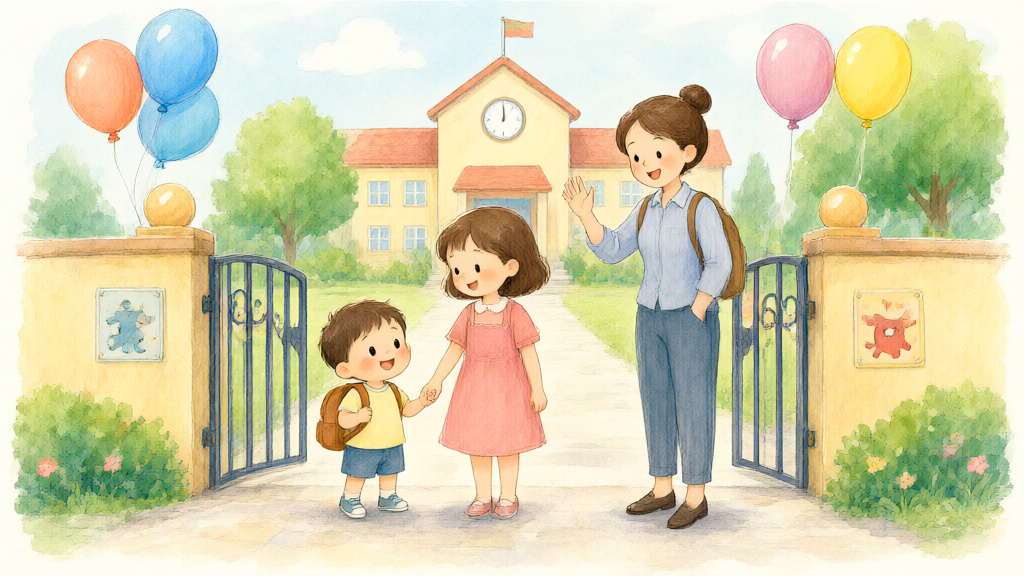
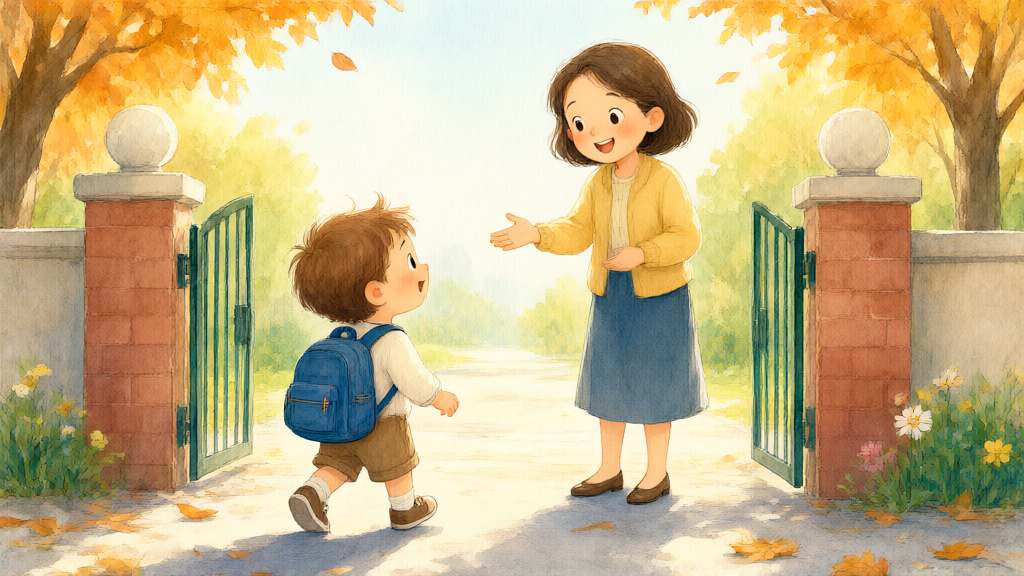
Starting preschool is a big deal, for kids and parents both. New grown-ups, new rules, a room full of children, and the hardest part: saying goodbye to you at the door. Some kids march right in. Many cling, cry, or seem fine for a week and then fall apart. All of that is normal. With a bit of preparation and a steady goodbye routine, most children settle in within a few weeks.
Here are practical starting preschool tips for before, during and after the first day.
A few weeks before preschool starts
Talk about it, often and simply
Describe what a preschool day looks like in concrete terms: "First you hang up your backpack. Then you play with blocks or paint. Then there's circle time, snack, and the playground. After lunch, I pick you up." Kids handle new things better when they can picture them.
Visit if you can
Many preschools offer an open house, a meet-the-teacher day or a short visit. Walk past the building on weekends, look at the playground, say the teacher's name at home. Familiarity takes a lot of the fear out.
Practice short separations
If your child has mostly been home with you, try a few short stretches with a grandparent, a sitter or a friend. Leaving and coming back, again and again, teaches the most important lesson of all: you always come back.
Shift the schedule early
If preschool starts at 8:30 and your child usually sleeps until 9, move wake-up and bedtime a little earlier each week. A tired child has a much harder first morning. Our guide on what to do when a toddler won't go to bed can help if evenings are a struggle.
Practice self-help skills
Opening a lunch box, pulling on shoes, washing hands, asking a grown-up for help. Small things that make a child feel capable in a new place.
What to say about preschool
Keep it positive but honest. Avoid overselling ("It'll be the best day ever!"), because if it isn't, your child may feel tricked.
- "Preschool is a place where kids play, learn, and have snack together. Ms. Lopez will take care of you."
- "It's okay to feel nervous. Lots of kids feel nervous at first."
- "I'll pick you up after lunch, before nap time." (Tie the time to an event, not a clock.)
- "Your job is to play. My job is to go to work. Then we'll be back together."
The first day and drop-off routine
The goodbye is the moment most parents dread. A clear, short routine makes it easier on everyone.
- Arrive a little early so it isn't rushed or crowded.
- Help your child into one activity. Puzzles, play-dough, the sand table.
- Say goodbye every time. Don't sneak out. It can feel easier in the moment, but it teaches a child that you might vanish without warning, and that makes the next drop-off harder.
- Use the same short goodbye. A hug, a kiss, a special phrase: "See you after lunch, alligator."
- Leave, even if there are tears. Hand your child to the teacher and go. Lingering and coming back usually makes it harder.
Many teachers will text a photo or let you call to check in once your child has calmed down. Most kids settle within minutes of the door closing.
A "pocket hug" or comfort object
Something small from home helps a lot: a photo of the family in their cubby, a heart drawn on their hand and yours, a tiny smooth stone they can hold. "When you miss me, press the heart and I'll feel it." Check the preschool's policy on toys from home first.
Separation anxiety at preschool
Crying at drop-off is very common, especially for two- and three-year-olds. It can also show up late. Some kids are fine for a week, then realize this is a daily thing and start protesting. That's normal too.
What helps:
- Stay calm and confident. Kids read your face. If you look worried, they assume there's something to worry about.
- Keep the routine identical. Same goodbye, same time, same person if possible.
- Talk to the teacher. Ask how long the crying lasts after you leave and what helps your child settle.
- Pick up on time. Being early or on time builds trust. If you said "after lunch," be there after lunch.
- Expect wobbles after weekends, holidays and sick days. Mondays and the week after Thanksgiving break can feel like starting over for a bit.
After school: the afternoon meltdown
Many children hold it together all day and fall apart the minute they see you. That isn't a sign preschool went badly. It's a sign you're their safe place. Offer a snack, a quiet cuddle and a calm afternoon. Skip the big questions for now.
Instead of "How was your day?" (which usually gets "fine" or nothing), try:
- "What did you play with today?"
- "Who did you sit next to at snack?"
- "What was the silliest thing that happened?"
- "Was there anything that felt hard?"
How a story helps with starting preschool
A story lets your child rehearse the whole preschool day from the safety of your lap: the walk in, the goodbye, a moment of missing mom, a new friend, a fun activity, and then the best part, the pickup. When the hero is a child just like them, they see the pattern clearly: it's hard at first, then it gets better, and mom or dad always comes back.
It's even stronger when the hero has your child's name, wears their backpack and carries their stuffed animal. With Winktale you can make a personalized story with the preschool lesson, or write your own lesson in a Big story if your situation is specific, like a new daycare after a move.
Read a full sample on our stories for starting preschool page, and see other topics in the therapeutic stories collection. Have an older child heading to "big school"? Read our guide to the first day of kindergarten. And if potty training is happening at the same time, our potty training story can help with that step, too.
When to talk to someone
Most kids adjust within a few weeks to a couple of months. Talk to the teacher and your pediatrician if your child is still extremely distressed after many weeks, isn't eating or sleeping well, seems withdrawn, or starts having new fears in other places.
A story is a gentle way to start a conversation, not a treatment. If separation anxiety lasts for weeks and keeps getting harder, talk to your pediatrician or a child psychologist.
Frequently asked questions
How long does it take a child to adjust to preschool?+
It varies a lot. Many children settle within a few weeks, while others need a couple of months. Steady routines, on-time pickups and a short goodbye help most.
Should I sneak out so my child doesn't see me leave?+
It's better not to. Sneaking out can make a child worry that you might disappear at any time. A short, loving goodbye followed by leaving works better over time.
My child was fine the first week and now cries every morning. Why?+
This is very common. Once the novelty wears off, children realize preschool is an everyday thing. Keep the routine the same and it usually eases again.
Can I put my child's friend or sibling in a personalized story?+
Yes. In a Winktale Big story you can add up to five family members, friends or pets, so a best friend, a big brother or the family dog can join your child on the preschool adventure.