First Day of Kindergarten: How to Prepare Your Child
November 2, 2026 · 7 min read
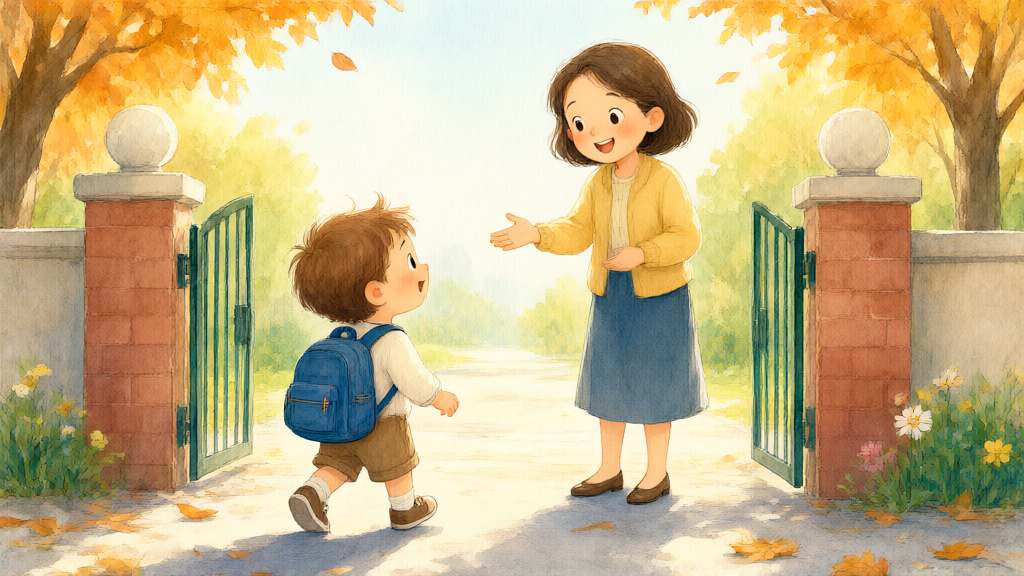
The first day of kindergarten is one of those days parents remember for years: the new backpack, the photo on the front steps, the lump in your throat at the classroom door. For your child, it's a mix of excitement and real nerves. A bigger building, a longer day, more kids, more rules. Even children who loved preschool can feel wobbly about "real school."
Here's how to prepare your child for kindergarten in the weeks before, on the morning itself, and in those first tired afternoons.
What kids worry about before kindergarten
Five-year-olds rarely say "I'm anxious about the transition." They say their tummy hurts, or ask the same question ten times, or suddenly want to be carried. Common worries underneath:
- Will I know where to go? Where's the bathroom?
- What if I don't have anyone to play with?
- What if the teacher is mean?
- How will I get home? Will you be there?
- What if I can't do the work?
Many of these come down to not knowing what will happen. The more concrete you make the day, the smaller the worries get.
A few weeks before school starts
Visit the school
Walk or drive the route a few times. Play on the school playground over the summer. If there's a kindergarten orientation, open house or "sneak peek" day, go. Find the classroom, the bathroom and the cafeteria together.
Practice the morning
Do a couple of test runs: wake up at the school-day time, get dressed, eat breakfast, put on the backpack, walk to the bus stop or the car. Making it feel ordinary takes away a lot of the pressure on day one.
Move bedtime earlier
Kindergarten days are long and busy. Start shifting bedtime and wake-up time a week or two ahead so your child isn't exhausted on the first morning. If evenings turn into a negotiation, our guide on what to do when a child won't go to bed has a simple routine to try.
Build small independence skills
Opening a lunch box and a juice box, zipping a jacket, using the bathroom alone, washing hands, asking a grown-up for help. These are the things that make a kindergartner feel capable.
Let your child make some choices
The lunch box, the backpack, the first-day outfit. A little ownership turns "something happening to me" into "something I'm getting ready for."
How to talk about kindergarten
Keep it upbeat and honest. Skip "You'll love it!" in favor of real details.
- "In kindergarten you'll have circle time, centers, recess, lunch in the cafeteria, and stories with your teacher."
- "Lots of kids feel a little nervous on the first day. Even teachers do."
- "If you need help, you can raise your hand and ask Mr. Patel."
- "I'll be right here at pickup, by the big tree."
If your child names a specific worry, take it seriously and make a plan together. "What if I need the bathroom?" becomes "You raise your hand and say 'May I use the restroom?' Let's practice."
The first day of kindergarten
The night before
Pack the backpack, set out clothes, make lunch. Keep the evening calm and bedtime on time. A favorite story helps. Our guide on how to choose bedtime stories has ideas for a quiet one.
The morning
Get up early enough that nobody has to rush. A simple breakfast, the photo on the porch, and out the door. Your mood sets the tone, so try to look calm and cheerful even if you're not quite there.
The goodbye
Many schools have parents say goodbye at the door or at the drop-off line. Wherever it is:
- Say a short, warm goodbye. A hug, your special phrase, "See you at pickup."
- Don't linger or come back for one more hug.
- Don't sneak away. A real goodbye builds trust for tomorrow.
A small comfort trick: draw a tiny heart on your child's hand and one on yours. "When you miss me, press it." A note in the lunch box works well too, even if your child can't read it yet. A drawing of your family says enough.
After school
Expect a tired, maybe cranky kid. Holding it together all day is hard work. Have a snack ready and keep the afternoon light.
Instead of "How was school?" try specific questions:
- "What was the best part of today?"
- "Who did you play with at recess?"
- "What did you have for lunch? Did you eat it?"
- "Was anything confusing or hard?"
Some kids tell you everything at bedtime instead. Lights-out is often when the real stories come out, so leave a few minutes for that.
When the nerves don't go away
Some wobbles in the first weeks are normal, along with tears after a long weekend or a rough patch after Halloween or Thanksgiving break. Keep the routine steady and stay in touch with the teacher.
Look for more support if your child refuses to go to school for weeks, has frequent stomachaches or headaches on school mornings, seems very withdrawn, or isn't sleeping well.
How a story helps with the first day of school
Stories let kids walk through a new experience before they live it. A hero who feels nervous on the first morning, finds the classroom, meets a friend at recess, and runs to a parent at pickup gives your child a mental map of the day, and an ending they can count on.
When that hero is your child, with their name, their new backpack and their little brother waving at the door, the story becomes theirs. With Winktale you can make a Big story of about 20 pages, pick the courage lesson or describe your own, and add family members or pets. Narration lets your child listen again on the morning of the big day. Read a full sample on our first day of school story page, and if a grandparent or godparent wants to help, a story makes a thoughtful back-to-school gift.
If your child is younger and just starting preschool, our preschool tips and stories for starting preschool are a better fit. More stories for big moments are in the therapeutic stories section.
A story is a gentle way to start a conversation, not a treatment. If school anxiety lasts for weeks or keeps your child from going to school, talk to your pediatrician, the school counselor or a child psychologist.
Frequently asked questions
How can I help my child who is nervous about kindergarten?+
Make the day concrete: visit the school, practice the morning routine, talk through what happens each part of the day, and plan for specific worries together.
Should I stay in the classroom on the first day of kindergarten?+
Follow the school's guidance. Most ask parents to say goodbye at the door or drop-off line. A short, confident goodbye usually helps children settle faster.
Is it normal for kindergartners to be exhausted and cranky after school?+
Very normal. Kindergarten days are long and full. A snack, quiet time and an early bedtime help a lot in the first weeks.
What should I put in a first-day lunch box?+
Familiar foods your child can open by themselves. A short note or a little drawing from home is a nice touch.