Siblings Fighting All the Time? How to Help Kids Make Up
November 2, 2026 · 7 min read
"He took my truck!" "She looked at me!" "MOM!" If your kids fight from breakfast to bedtime, you might wonder whether they'll ever be friends. Siblings fighting is one of the most universal parts of family life, and while it's exhausting, it's also how kids practice some of the hardest skills there are: sharing, standing up for themselves, reading another person's feelings, and making up.
Your job isn't to stop every fight. It's to keep everyone safe and slowly teach them how to sort things out themselves.
Why siblings fight
- Competition for you. Attention is the most valuable thing in the house, and siblings know it.
- Different ages, different needs. A four-year-old wants to build a tower. A two-year-old wants to knock it down. Both are acting their age.
- Tired, hungry, bored. Many fights happen right before dinner, after daycare or on long rainy days.
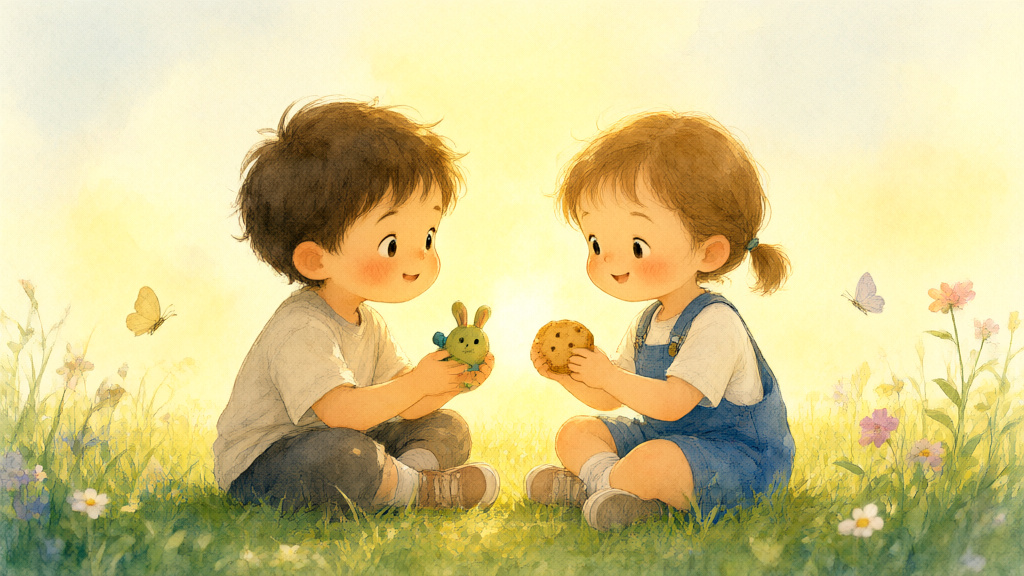
- Fairness. Young kids track who got more juice, the bigger cookie, the front seat.
- Big feelings, few words. Toddlers and preschoolers often hit or grab because they don't yet have the words for "I'm frustrated."
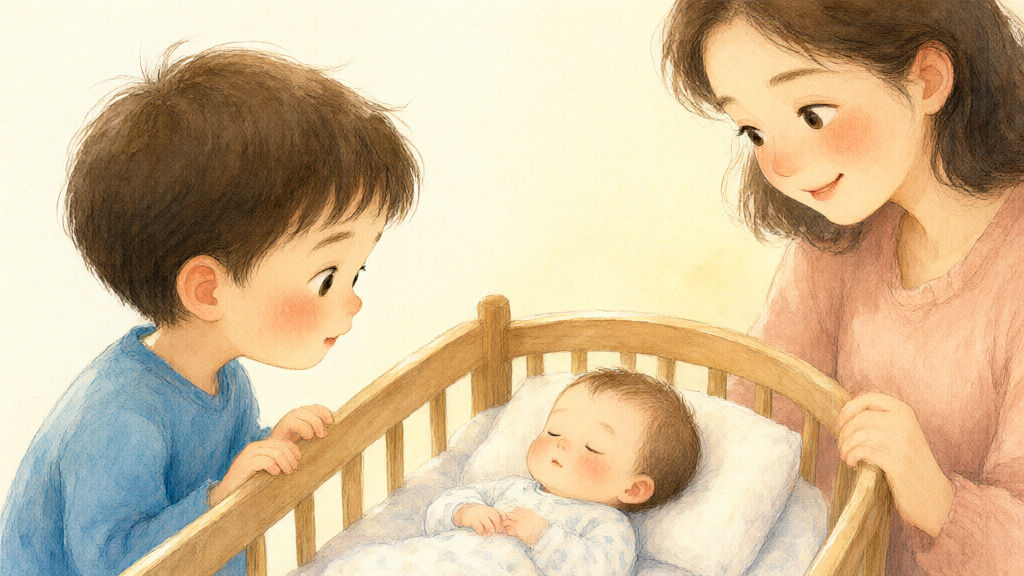
- A big change. A new baby, a move, a parent traveling. Stress tends to show up between siblings first. If you're expecting, our guide on preparing a child for a new baby may help.
When to step in and when to wait
Not every squabble needs a referee. A rough guide:
- Let it play out if it's mostly verbal, nobody is getting hurt, and they're close in age and power. Stay nearby. Sometimes they'll solve it in thirty seconds.
- Coach if it's escalating, or one child is much younger or keeps getting steamrolled.
- Step in right away if anyone is hitting, biting, throwing things, or if one child is truly scared.
When you do step in, separate first, talk later. Nobody can learn anything in the middle of a meltdown.
What to say in the moment
Skip the courtroom. Trying to figure out who started it rarely works, and it puts you in the role of judge. Instead:
- Describe what you see. "I see two kids and one truck. That's a hard problem."
- Name both feelings. "You really want to keep playing with it. And you've been waiting a long time."
- State the rule. "In our family, we don't hit. I'll keep you both safe."
- Hand the problem back. "What could you two do so you both get a turn?"
For toddlers, you'll need to offer solutions: "You can use the timer. When it beeps, it's her turn." For older preschoolers, you can often just wait and let them come up with ideas. You'll be surprised what they suggest.
Helping them make up
Forced apologies ("Say sorry. Now!") usually produce a mumbled word and no real change. Real making up takes a little more time.
- Calm down first. Separate spots, a few deep breaths, a drink of water.
- Talk about what happened. "What happened? How did you feel? How do you think he felt?"
- Find a way to repair. An apology, yes, but also a hug, sharing the toy, helping rebuild the tower, drawing a picture.
- Move on. Once it's resolved, don't bring it up again later.
Young children learn to apologize by watching you. When you lose your temper, coming back and saying "I'm sorry I yelled. I was frustrated, but yelling wasn't okay" teaches more than any lecture.
Preventing the next fight
- Give each child some one-on-one time. Even ten minutes a day with each kid reduces competition for attention.
- Don't compare. "Why can't you be calm like your sister?" fuels rivalry for years.
- Have special things that don't have to be shared. A favorite stuffed animal or a box of treasures that belongs to one child only.
- Use timers for popular toys. It takes the argument out of "who's next."
- Plan for the danger zones. A snack before the after-school meltdown, separate activities during the last hour before dinner.
- Notice when they get along. "You two built that whole fort together. That was great teamwork."
Sharing is a big part of sibling fights. For more on that, read our guide on teaching toddlers to share.
A "making up" routine for your family
Some families find it helps to have the same short routine after every fight, so kids know what to expect:
- Pause. Everyone goes to a calm spot: a beanbag, the stairs, a corner with books.
- Check in. When they're ready, each child says how they felt, without interruption.
- Fix it. Together, they choose a way to make it right: a hug, a high five, giving back the toy, building something new.
- Fresh start. Say it out loud: "Okay, fresh start." And mean it.
It doesn't need to be perfect. With repetition, even preschoolers start to run parts of it on their own.
How a story helps siblings make up
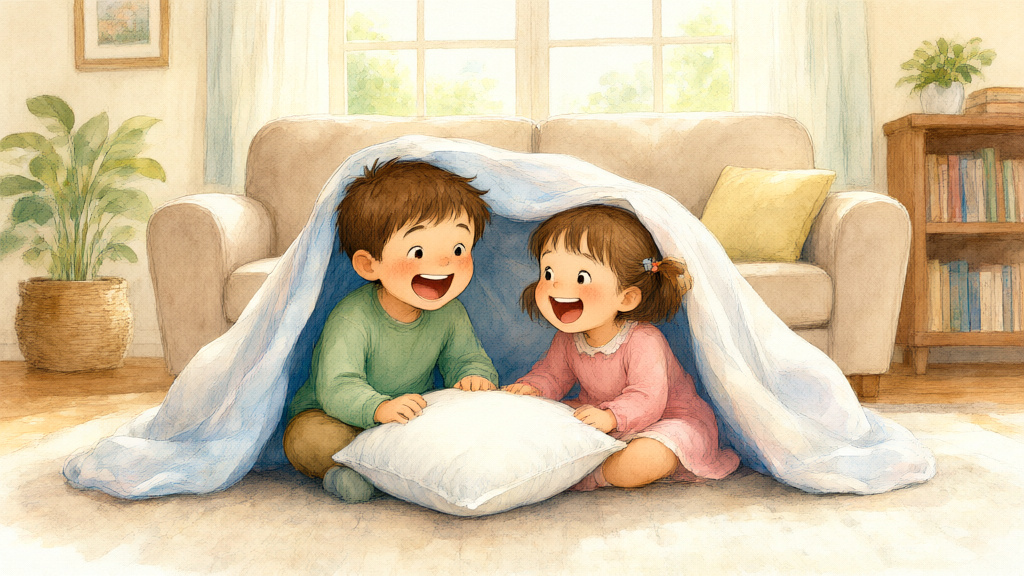
Children often can't see a fight from the other side while they're in it. A story lets them watch it from the outside. A brother and sister who fight over a blanket fort, both feel hurt, and then find a way to build an even better fort together give kids a model they can actually picture.
Read the story when everyone is calm, ideally to both kids together. Don't point out who's who. They'll figure it out.
It's even better when the heroes are your actual kids. On Winktale, a Big story lets you add up to five family members, friends or pets, so both siblings can be in it, with their names and looks. Choose the "making up with a brother or sister" lesson, or "saying sorry," or describe your own situation. For a related story about sharing, see our story about sharing, and browse more topics in our therapeutic stories.
When to get help
Sibling conflict is normal. Talk to your pediatrician or a child psychologist if one child is regularly hurt or frightened, if aggression is getting worse, or if the fighting is affecting a child's sleep, school or mood for weeks.
A story is a gentle way to start a conversation, not a treatment. If sibling conflict feels out of control or lasts for weeks, talk to your pediatrician or a child psychologist.
Frequently asked questions
Is it normal for siblings to fight all the time?+
Frequent squabbles are very common, especially among young kids close in age. What matters is that everyone stays safe and kids slowly learn to solve problems.
Should I make my kids apologize?+
A forced apology often means very little. Help them calm down, talk about what happened, and find a way to repair, such as a hug, sharing or helping fix what was broken.
Should I figure out who started the fight?+
Usually not. Focus on feelings, rules and solutions instead of acting as a judge, unless someone was hurt.
Can I put both of my kids in a personalized story?+
Yes. In a Winktale Big story you can add up to five family members, friends or pets, so both siblings can be heroes together.