Bedtime Stories for Kids: How to Choose and Read Them
November 2, 2026 · 7 min read
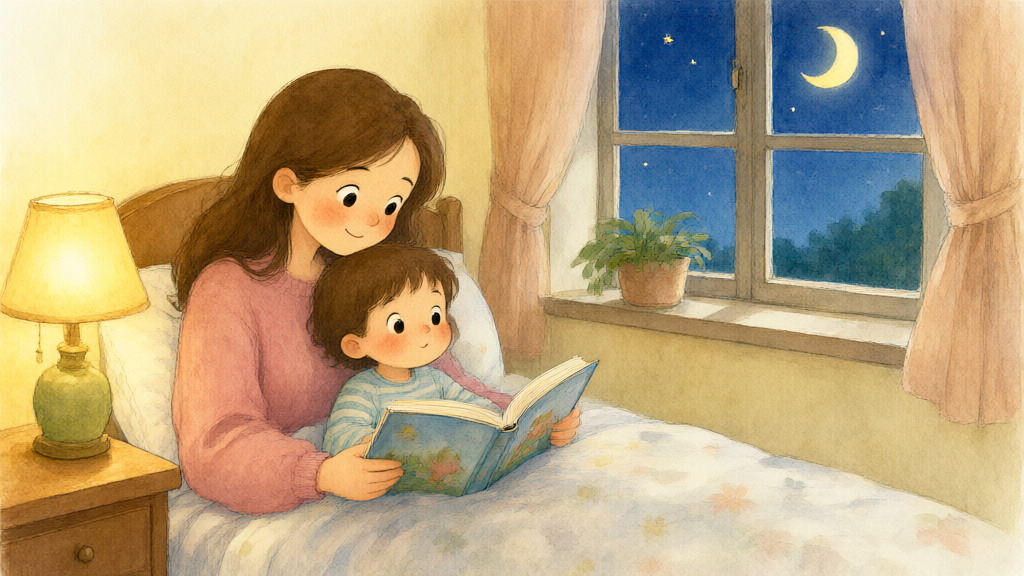
Bedtime stories for kids do more than fill the gap between pajamas and lights-out. They slow everyone down, give your child your full attention for ten minutes, and send a clear signal: the day is over, sleep is next. The American Academy of Pediatrics encourages reading aloud to children from infancy, and bedtime is the slot most families can actually protect.
But not every book works at 8 p.m. Some wind kids up. Some are too long. Some are lovely but too scary for a four-year-old's imagination in a dark room. Here's how to choose and read stories that help your child settle.
What makes a good bedtime story
A great daytime book and a great bedtime book aren't always the same. For the last story of the night, look for:
- A calm arc. Some tension is fine, but the ending should be quiet, safe and warm. Home, hugs, sleep.
- Gentle rhythm. Repetition, soft rhymes and predictable patterns lull the brain the way a lullaby does.
- No real villains. Save the dragons and pirates for the afternoon. At night, conflicts should be small: a lost mitten, a shy friend, a rainy day.
- The right length. Five to ten minutes of reading aloud is plenty for most preschoolers. If a book takes twenty, read a chapter or save it for the weekend.
- Something familiar. Kids relax when they recognize the world of the story: a bedroom, a backyard, a grandma's kitchen.
Bedtime stories by age
Babies and young toddlers (up to about 2)
At this age the words matter less than your voice. Board books with simple pictures, rhymes, and the same few lines repeated night after night. Point to things, name them, keep it short. If your baby wants to chew the book, that counts as engagement.
Toddlers and preschoolers (about 2 to 5)
This is the golden age of the bedtime story. Kids can follow a simple plot, love hearing the same book on repeat, and start to see themselves in characters. Look for stories about everyday things they're living through: potty training, a new sibling, a first day somewhere new. For very sleepy nights, our collection of short bedtime stories takes about five minutes to read.
Kindergarten and early elementary (about 5 to 8)
Now you can try longer stories and simple chapter books, read a little each night. Kids this age enjoy a bit of adventure and humor, and they start asking real questions about characters' choices. Keep the last few minutes calm. If the chapter ends on a cliffhanger, stop a page early. For a fuller breakdown, see our guide to reading to kids by age.
How to read so it calms rather than excites
The way you read matters as much as what you read.
- Lower your voice and slow down. Read a bit slower than feels natural. Let pauses happen.
- Dim the lights. A lamp or a reading light is enough. Bright overhead light keeps the brain in "daytime" mode.
- Skip the big performances near the end. Funny voices are great at the start. As the story winds down, so should you.
- Let your child turn pages or point. It keeps them involved without getting them up.
- Keep screens out of it. The AAP recommends keeping screens out of the bedtime routine. A book or a story you tell from memory works better than a tablet.
- End with the same words. "The end. Goodnight, little bear." A closing phrase becomes part of the ritual and tells your child it's really time.
Answering "One more!"
Every parent hears it. A few approaches that keep the peace:
- Set the number before you start. "Tonight we have two books. You pick one, I pick one."
- Offer a choice inside the limit. "Would you like the long one or two short ones?"
- Move the extra story to the morning. "Let's save that one for breakfast." Many kids happily accept a promise.
- Switch to a whispered story. Lights off, you tell a very short made-up story in a whisper. It's still a story, but it's already halfway to sleep. Our guide on how to make up a bedtime story has a simple formula.
If the bargaining is part of a bigger bedtime struggle, our guide to what to do when your toddler won't go to bed has more ideas.
Stories with a gentle lesson
Bedtime is also a quiet moment to work through something hard. When a child is scared of the dark, nervous about preschool or unsure about a new baby, a story where a hero faces the same thing can do more than any pep talk. The child isn't being told what to feel. They just watch someone like them get through it.
These are often called therapeutic stories, and you'll find examples in our therapeutic stories section, including one for kids who are afraid of the dark. Read the same one several nights in a row. Repetition is how the lesson sinks in.
Why personalized stories work at bedtime
Kids are fascinated by themselves. Hear their own name in a story and they lean in. A personalized story book makes your child the hero, with their name, their look, sometimes their dog or little sister. For a sleepy child, it's a powerful mix: familiar, a little magical, and all about them.
You can make one with Winktale. A Mini story has six illustrated pages and is ready in a couple of minutes. A Big story runs around twenty pages, and you can add family members or pets and pick a lesson for the story to carry. There's narration too, so on nights when you're losing your voice, the story can read itself while you sit together. Creating a story is free, and you only pay if you'd like to keep it.
A simple bedtime story routine
If you're starting from scratch, try this for a week:
- Bath or wash-up, pajamas, teeth.
- Lights down, into bed.
- One or two books, chosen together.
- A short chat: "What was the best part of today?"
- The same goodnight phrase and a hug.
That's it. You can find more ideas and story collections on our bedtime stories page.
Frequently asked questions
How long should a bedtime story be?+
For most toddlers and preschoolers, five to ten minutes of reading aloud is about right. Older kids can handle a chapter or two, but keep the last few minutes quiet.
Is it okay to read the same book every night?+
Yes. Repetition is comforting for young children and helps them learn language and predict what comes next. Many kids go through phases of wanting one favorite on repeat.
At what age should I start reading bedtime stories?+
The American Academy of Pediatrics encourages reading aloud from infancy. With babies, short board books and your voice are what count.
Are audio stories as good as reading aloud?+
Listening together is a nice option, especially on busy nights. Reading aloud adds closeness and conversation, so many families mix the two.