Toddler Won't Brush Teeth? 12 Ideas That End the Nightly Fight
November 2, 2026 · 7 min read
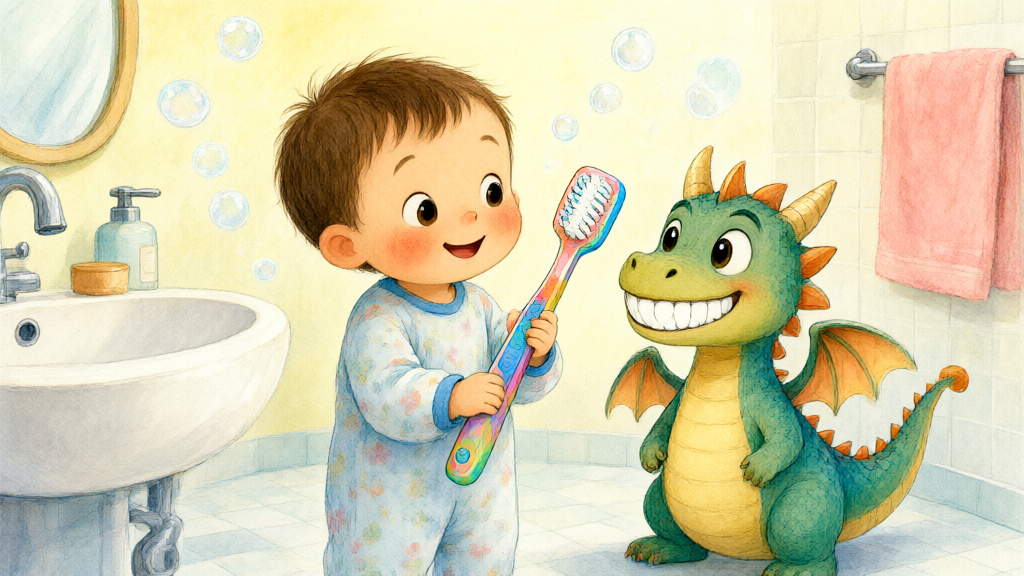
Clamped lips. A head that whips left and right. A toddler who suddenly goes boneless on the bathroom floor. If your toddler won't brush teeth, you're in good company: tooth brushing is a nightly battle in a lot of homes with little kids. It's also one you can't really skip, which makes it extra stressful.
The good news is that most kids come around once brushing feels less like something done to them and more like something they're part of. Here's why toddlers resist and what tends to help.
Why toddlers fight tooth brushing
- It feels invasive. Someone else's hand, a buzzing or scratchy brush, foam in the mouth. For a sensitive kid, that's a lot.
- They want control. Toddlers are learning they can say no, and closing their mouth is a very effective no.
- It's at the end of the day. Tired kids have the least patience for anything, and brushing usually lands right before bed.
- Teething or sore gums. A new molar can make the brush genuinely uncomfortable.
- The toothpaste. Some kids hate mint, or the foam, or the taste of a particular flavor.
Knowing the reason helps you choose the fix. A kid who wants control needs choices. A kid with sore gums needs a softer brush and a gentler touch.
What the experts recommend (briefly)
The American Academy of Pediatrics and the American Dental Association recommend brushing twice a day, morning and night, with fluoride toothpaste: a smear about the size of a grain of rice for children under three, and a pea-sized amount from three to six. Parents should help with brushing until kids have the coordination to do a thorough job themselves, often well into the early school years. The first dental visit is recommended around the first birthday.
That's the goal. The rest of this article is about getting there without tears.
12 ideas that make brushing easier
Give them control
- Let them choose the brush. A dinosaur, a unicorn, a light-up handle. Ownership matters. Keeping two brushes and letting them pick each night works even better.
- "You first, then me." Your child brushes on their own, then you "check for sugar bugs" and finish the job. Everyone gets a turn.
- Offer small choices. "Top teeth first or bottom teeth?" "Standing on the stool or sitting on my lap?"
Make it a game
- Hunt the sugar bugs. Narrate what you find: "Oh, there's a cracker crumb hiding by this tooth. Got it!" Kids love the idea of chasing something away.
- Use a song or timer. Two minutes is a long time for a toddler. A short brushing song or a sand timer gives brushing a clear end.
- Brush a toy's teeth first. Their teddy or dinosaur gets brushed, then it's their turn. It makes the routine feel safe and predictable.
- Make silly faces in the mirror. "Show me your lion roar!" opens the back teeth. "Show me a monkey!" gets the front ones.
Change the setup
- Try a different position. Lying on the bed or your lap, with their head toward you, can be easier for both of you than standing at the sink.
- Try a different toothpaste. Many kids who refuse mint are fine with a milder flavor.
- Go soft. Use an extra-soft brush, especially when they're teething.
- Move it earlier. Brush right after pajamas, before your child is completely exhausted, instead of at the very end of the routine.
Bring in a story
- Read a story about brushing teeth. A hero who doesn't want to brush, discovers why it matters, and wins against the sugar bugs is something your child can copy. More on that below.
What to say (and what to skip)
Phrases that help:
- "Your teeth worked hard today. They chewed your apple and your pasta. Let's give them a bath."
- "You can be the boss of the top teeth. I'll be the boss of the bottom teeth."
- "I know you don't like it. It's okay to not like it. We still need to do it, and then it's story time."
- "Let me see those clean teeth. Wow, they're sparkling!"
What tends to backfire:
- Scary threats. "Your teeth will fall out!" can make brushing more stressful, not less.
- Long lectures. A toddler won't connect brushing tonight with a cavity months from now.
- Bribes with sweets. It sends a mixed message, and it doesn't usually stick.
- Turning it into a wrestling match every night. If your child is very upset, take a short break, stay calm, and try again a few minutes later.
When you have to brush anyway
Some nights nothing works and the teeth still need cleaning. Stay calm and quick: sit with your child on your lap, head tilted back slightly, and brush gently but thoroughly for as long as you reasonably can. Say what you're doing. Afterward, a hug and "All done, you did it" makes a better last memory than an argument.
Then think about what to change tomorrow: time, place, toothbrush, game.
How a story helps with tooth brushing
Kids love stories where the hero has the same problem they do. A child who refuses to brush, hears about a hero who also hated brushing and then discovered a sugar-bug army hiding in his molars, is far more likely to grab a toothbrush the next night.
It works even better when the hero is your child, with their name, their dinosaur toothbrush, their little sister cheering them on. On Winktale you can pick the "brushing teeth" lesson and make a story with your child as the hero. Read a full sample on our story about brushing teeth page, or see other topics in our therapeutic stories.
If brushing is part of a bigger bedtime battle, our guide on what to do when a toddler won't go to bed can help. And if a dentist visit is coming up, our story about going to the doctor can make check-ups feel less scary too.
When to check with a professional
Talk to your pediatrician or pediatric dentist if brushing seems painful, if you see bleeding gums, white or brown spots on teeth, or if your child has strong reactions to textures in many situations, not just tooth brushing.
A story is a gentle way to start a conversation, not a treatment. If the struggle lasts for weeks or your child seems to be in pain, talk to your pediatrician, a pediatric dentist or a child psychologist.
Frequently asked questions
At what age can a child brush their own teeth?+
Kids can start brushing on their own early, but most need a parent to help and finish the job until they have the coordination to brush thoroughly, often into the early school years.
How much toothpaste should a toddler use?+
The AAP and the American Dental Association recommend a rice-grain-sized smear of fluoride toothpaste for children under three and a pea-sized amount for ages three to six.
What if my toddler refuses to open their mouth?+
Try a game like “show me a lion roar,” a different position such as lying on your lap, or letting them brush a toy's teeth first. Stay calm and keep it short.
Can a story really help a toddler brush their teeth?+
It often does. A hero who goes through the same struggle gives your child a model to copy and something to talk about at the sink.