Teaching Toddlers to Share: What's Realistic and What Works
November 2, 2026 · 7 min read
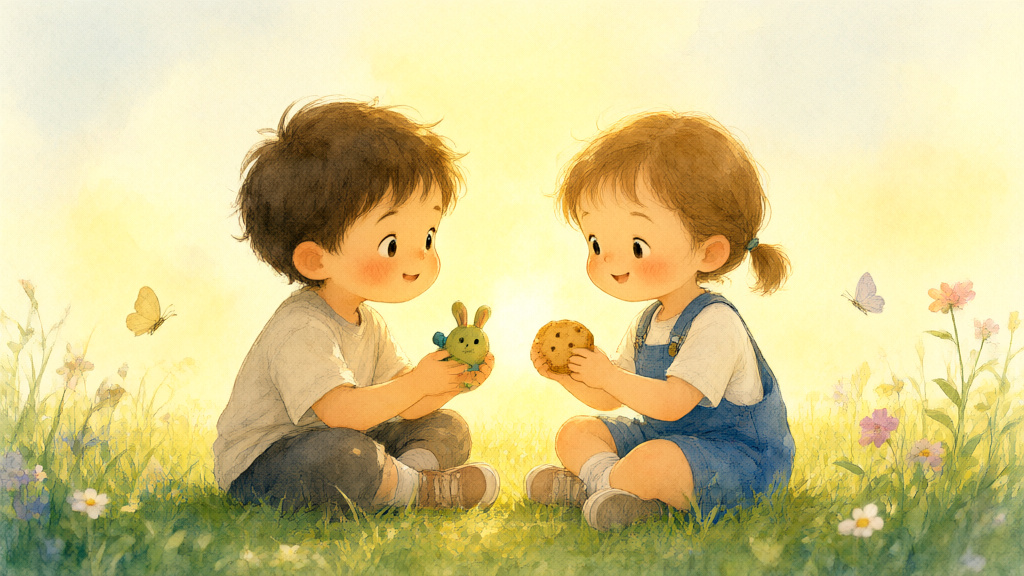
"Mine!" It might be the most-used word in a two-year-old's vocabulary. If you've watched your toddler snatch a shovel at the sandbox or cling to a truck with a death grip while another kid cries, you're not alone. Teaching toddlers to share is one of the trickiest parts of early parenting, partly because it takes a lot longer than most of us expect.
Here's what's actually realistic at each age, and what helps.
Why toddlers don't want to share
It's not selfishness in the adult sense. A few things are going on:
- They're just figuring out "mine." The idea that some things belong to them is new and exciting. Holding on tight is part of learning it.
- They live in the moment. "You'll get it back later" doesn't mean much when "later" is a fuzzy idea.
- Empathy is still developing. Toddlers are only starting to understand that other people have feelings different from their own.
- Impulse control is limited. Even when they know they should wait, their hands often grab first.
In other words: refusing to share at two is developmentally normal. Real, willing sharing usually comes later in the preschool years, and even then, it comes and goes.
What to expect by age
Around 1 to 2: Little real sharing. Toddlers may hand you things (and want them right back), which is a sweet early step. Mostly, they play side by side rather than together.
Around 2 to 3: Lots of "mine!" Taking turns with a lot of adult help is possible. Grabbing and tears are common.
Around 3 to 4: Kids start to play together more and can take turns with less help. They're beginning to understand that sharing can make play more fun.
Around 4 to 5: Many kids can share and negotiate on their own, at least sometimes, especially with friends they like.
Taking turns works better than forced sharing
When we tell a toddler to "share" a toy, we usually mean "give it to the other kid now." From the toddler's perspective, that's not sharing. That's losing.
Taking turns is easier to understand and feels fairer:
- The child who has the toy gets to finish their turn. "You can play with it until you're done. Then it's Ava's turn."
- The waiting child gets support. "It's hard to wait. Let's find something else to do while Liam finishes his turn."
- Use a timer for hot items. "When the timer beeps, it's his turn." The timer becomes the bad guy, not you.
This teaches both kids something: the one with the toy learns that they won't lose things the moment someone else wants them, and the waiting child learns that turns come around.
What to say at playdates and the playground
Some phrases that help:
- "You're using it right now. When you're done, can you give it to Mia?"
- "Mia is waiting. She really wants a turn."
- "Can you show Mia how it works?"
- "Look, Mia is smiling. You made her happy when you gave her the shovel."
- "We don't grab. You can ask: 'Can I have a turn when you're done?'"
Practical tips
- Put away the "too special" toys before playdates. Everyone has a few things they just can't share. Let your child pick a few things to keep in their room. Then everything else is for sharing.
- Have duplicates. Two shovels, two sets of crayons. It removes a lot of conflict.
- Model sharing yourself. "I'm going to share my orange with you. Want half?" Kids learn more from what they see than from what they're told.
- Practice at home. Take turns stacking blocks or rolling a ball. Say "My turn, your turn" out loud.
- Notice and name it. When your child shares on their own, say so: "You gave him your truck. That was kind."
- Don't shame. "Don't be so selfish!" makes kids defensive, not generous.
Games that practice sharing
Kids learn turn-taking best through play, when nothing is at stake. A few easy games to try at home:
- Roll the ball. Sit across from each other and roll a ball back and forth, saying "My turn, your turn."
- Build a tower together. Each person adds one block at a time. The tower only grows if everyone takes turns.
- Simple board games. For three- and four-year-olds, a game with a spinner or a die and very short turns is great practice for waiting.
- Pretend play. Run a pretend bakery or ice cream shop where customers and shopkeepers swap roles.
- Snack sharing. Split a banana or a box of raisins with a sibling or friend, and let your child do the dividing.
Keep these games short and fun. The goal isn't to drill a lesson but to show, again and again, that taking turns keeps the fun going.
Sharing between siblings
Siblings fight over toys more than anyone, because they're competing for the same toys and the same parents every single day. Our guide on siblings fighting covers how to step in and how to help kids make up.
How a story helps teach sharing
A story lets your child see sharing from both sides without feeling put on the spot. A hero who refuses to share, feels lonely playing alone, and then discovers that playing together is more fun shows the whole arc in a few minutes. Your child watches the hero make the choice and feel good about it.
Read the story at a calm time, not right after a fight. Don't point out the moral. Let your child connect the dots, and later, at the playground, you can gently remind them: "Remember what the hero did with his sled?"
It works even better when the hero is your child, with their name, look and favorite toys. On Winktale you can pick the "sharing" lesson and create a story starring your child. In a Big story you can add up to five family members, friends or pets, so a sibling or a best friend can be part of it too.
Read a full sample on our story about sharing page, and see other topics in our therapeutic stories section. For three-year-olds specifically, our guide to stories for 3-year-olds explains which kinds of stories work best at that age.
A story is a gentle way to start a conversation, not a treatment. If your child's difficulties with other kids last for weeks or get more intense, talk to your pediatrician or a child psychologist.
Frequently asked questions
At what age should a toddler start sharing?+
Real, willing sharing usually develops during the preschool years. Before that, taking turns with a lot of adult help is a realistic goal.
Should I make my toddler share?+
Forcing a child to hand over a toy often backfires. Taking turns, where each child gets to finish their turn, is easier to understand and feels fairer.
What should I do when my toddler grabs a toy from another child?+
Calmly return the toy, name both feelings, and show your child how to ask for a turn. Help them find something else to do while they wait.
Can a story help a toddler learn to share?+
Yes. A hero who learns that sharing makes play more fun gives your child a model to copy, without a lecture.